

A refinery is essentially a continuous heat management system.
From crude oil processing to final product cooling, large amounts of heat must be continuously transferred and rejected to maintain safe, stable, and efficient operation.
Here is a simplified look at how the cooling cycle works:
1. Refinery Process
Crude oil is processed through distillation, cracking, hydrotreating, reforming, and other units to produce fuels and other valuable petroleum products.
2. Heat Generation
These refining processes operate at elevated temperatures and generate substantial amounts of waste heat. Excess heat must be removed to maintain the required process conditions.
3. Heat Exchangers
Shell-and-tube heat exchangers and condensers transfer heat from hot hydrocarbon streams to a cooling medium, reducing the process-fluid temperature to the required level.
4. Cooling Water / Air
The absorbed heat is carried away by circulating cooling water or ambient air. Pumps transport heated cooling water from process units toward the heat-rejection system.
5. Heat Rejection
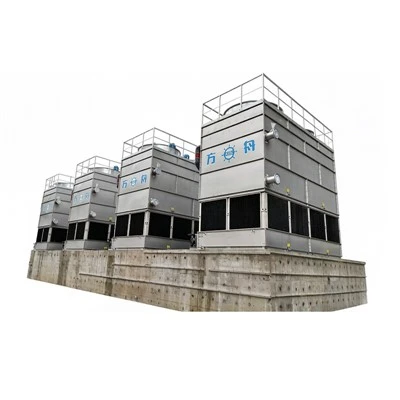
This is where cooling towers play a critical role.
In a wet cooling tower, hot circulating water is distributed over the fill media while fans draw ambient air through the tower. Evaporation and air-water heat and mass transfer remove heat from the circulating water and release it into the atmosphere.
6. Recirculation
Cooled water collects in the cooling tower basin and is pumped back to the refinery's heat exchangers.
The cycle then repeats continuously:
Process → Heat Generation → Heat Exchangers → Cooling Water → Heat Rejection → Recirculation
This continuous thermal cycle helps refineries maintain stable process temperatures, reliable operation, and efficient heat management.
At ARK, we focus on engineered cooling solutions for demanding industrial applications, including refineries, petrochemical plants, LNG, power generation, and process industries.
Understanding the complete cooling cycle is the first step toward designing the right heat-rejection solution.