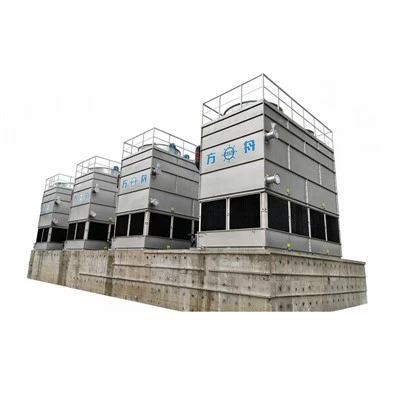

Spray System Maintenance
1. Observe the spray water quality. If it is yellow, thick, sticky, or feels slippery to the touch, the water quality is too poor. Replace and add fresh water immediately.
2. Check if the closed-circuit cooling tower's water spray system is not discharging water. If impurities are present, clear any blockages.
3. Check the water curtain for even and sufficient flow, ensuring consistency across the entire system.
4. Check the inlet filter for blockages, commonly caused by leaves, threads, plastic bags, or silt.
5. Clean the water collection tank weekly to remove dirt and residue.
6. Check the water inlet float valve of the closed-circuit cooling tower for damage. Replace if necessary.
Exterior Inspection
1. Check all fasteners on the closed-circuit cooling tower for looseness. Tighten any loose fasteners immediately.
2. Check for leaks, overflows, or water seepage around the perimeter.
3. Check for corrosion or deformation around the perimeter. 4. Check for branches or debris obstructing the fan blades.
5. Check the water pressure gauge reading for normalcy, fluctuations, and any air accumulation.
Electrical Inspection
1. Check the control cabinet's seal; keep the door closed to prevent dust, metal, or foreign objects from entering and causing short circuits or electric shocks.
2. Check the current of each motor and compare it with the rated current on the motor nameplate for any abnormalities.
3. Check the motor casing's heat dissipation and the integrity of the fan.
4. Check the fan motor's reducer.
5. Check the belt tension of the fan's belt drive.
Heat Exchanger Maintenance
1. For users in northern regions, replace the fluid with antifreeze in winter; in summer, it's best to replace it with purified water or demineralized water.
2. To prevent scale buildup on the heat exchanger's exterior, pay attention to changing or descaling the spray water, referring to point 1.
3. Once external scale buildup occurs, it is difficult to remove.
a) Chemical cleaning: Select appropriate chemical agents based on the materials of the heat exchanger, outer shell, and internal frame, and perform cleaning and descaling according to the applicable methods.
b) Disassembly and thorough physical cleaning: Common methods include drying and then hammering or scraping off metal objects. However, this may not completely clean the central part of the heat exchanger.
c) If complete cleaning is still not possible and the heat exchange efficiency fails to meet process requirements, the heat exchanger must be replaced with a new one.